Laboratorio di simulazione urbana "Fausto Curti", DAStU/Politecnico di Milano
Laboratorio di Politiche sociali, DAStU/Politecnico di Milano
DICA/Politecnico di Milano
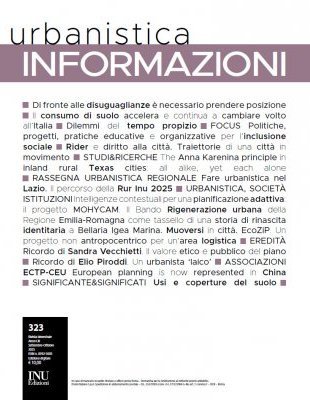
Il progetto MOHYCAM (2025-27), finanziato da Fondazione Cariplo nell’ambito del bando “Territori Sicuri”, affronta le vulnerabilità idrogeologiche del ghiacciaio del Belvedere e del territorio comunale di Macugnaga sviluppando una comprensione approfondita dei rischi indotti dal cambiamento climatico e progettando strategie di coinvolgimento e sensibilizzazione della comunità locale, per migliorare la risposta al rischio alluvione. Il progetto integra metodi e approcci partecipativi che valorizzano la percezione della comunità e la memoria collettiva come fattori chiave per la riduzione della vulnerabilità, adottando strumenti di citizen science, sistemi informativi geografici partecipativi (PGIS) e metodologie qualitative come interviste ed etnografia. Tali approcci permettono di comprendere le strategie di vita, il benessere, le capacità adattive individuali e collettive e la governance locale.
Beel D., Wallace C., Webster G., Nguyen H. (2015), “The geographies of community history digital archives in rural Scotland”, Scottish Geographical Journal, vol. 131, no. 3-4, p. 201-211. https://doi.org/10.1080/14702541.20...
Benson D., Fritsch O., Langstaff L. (2018), “Local flood risk management strategies in England: patterns of application”, Journal of Flood Risk Management, vol. 11, p. S827-S837. https://doi.org/10.1111/jfr3.12264
Canevari-Luzardo L., Bastide J., Choutet I., Liverman D. (2015), “Using partial participatory GIS in vulnerability and disaster risk reduction in Grenada”, Climate and Development, vol. 9, no. 2, p. 95-109. https://doi.org/10.1080/17565529.20...
Ciullo A., Viglione A., Castellarin A., Crisci M., Di Baldassarre G. (2017), “Socio-hydrological modelling of flood-risk dynamics: comparing the resilience of green and technological systems”, Hydrological Sciences Journal, vol. 62, no. 6, p. 880-891. https://doi.org/10.1080/02626667.20...
Corburn J. (2003), “Bringing local knowledge into environmental decision making: improving urban planning for communities at risk”, Journal of Planning Education and Research, vol. 22, p. 420-433. https://doi.org/10.1177/0739456X030...
Cruz-Bello G.M., Alfie-Cohen M. (2022), “Capturing flood community perceptions for social vulnerability reduction and risk management planning”, Environmental Science & Policy, vol. 132, p. 190-197. https://doi.org/10.1016/j.envsci.20...
Di Baldassarre G., Viglione A., Carr G., Kuil L., Yan K., et al. (2015), “Debates - perspectives on socio-hydrology: capturing feedbacks between physical and social processes”, Water Resources Research, vol. 51, p. 4770-4781. https://doi.org/10.1002/2014WR016416
Geertz C. (1983), Local knowledge, Basic Books, New York.
Kaab A., Huggel C., Barbero S., Chiarle M., Cordola M., et al. (2004), “Glacier hazards at Belvedere Glacier and the Monte Rosa east face, Italian Alps: processes and mitigation”, in Proceedings of the International Symposium INTERPRAEVENT, Intrerpravent, Riva del Garda, 24-27 maggio 2004, p. 67-78.
Kato S., Ahern J. (2008), “‘Learning by doing’: adaptive planning as a strategy to address uncertainty in planning”, Journal of Environmental Planning and Management, vol. 51, no. 4, p. 543-559. https://doi.org/10.1080/09640560802...
Löschner L., Nordbeck R., Scherhaufer P., Seher W. (2016), “Scientist-stakeholder workshops: a collaborative approach for integrating science and decision-making in Austrian flood-prone municipalities”, Environmental Science & Policy, vol. 55, p. 345-352. https://doi.org/10.1016/j.envsci.20...
Micelli E., Ostanel E., Lazzarini L. (2023), “The who, the what, and the how of social innovation in inner peripheries: a systematic literature review”, Cities, vol. 140, no. 104454, p. 1-10. https://doi.org/10.1016/j.cities.20...
Morello E., Mahmoud I., Lazzarini L., Ayatollahi A. (2025), “Co-creation for urban biodiversity: the experience of a public participation process in a living lab in Milan, Italy”, in Proceedings of the ISOCARP World Planning Congress - Reinventing the (In)visible Cities, Isocarp, Siena, 8-12 ottobre 2024. https://doi.org/10.47472/9EvnJGfC
Slinger J.H., Cunningham S.C., Kothuis B.L. (2023), “A co-design method for including stakeholder perspectives in nature-based flood risk management”, Natural Hazards, vol. 119, no. 3, p. 1171-1191. https://doi.org/10.1007/s11069-023-...
Sugimoto S. (2014), “Digital archives and metadata as critical infrastructure to keep community memory safe for the future: lessons from Japanese activities”, Archives and Manuscripts, vol. 42, no. 1, p. 61-72. https://doi.org/10.1080/01576895.20...
Thaler T., Levin-Keitel M. (2016), “Multi-level stakeholder engagement in flood risk management: a question of roles and power - lessons from England”, Environmental Science & Policy, vol. 55, p. 292-301. https://doi.org/10.1016/j.envsci.20...
Wolff E. (2021), “The promise of a ‘people-centred’ approach to floods: types of participation in the global literature of citizen science and community-based flood risk reduction in the context of the Sendai Framework”, Progress in Disaster Science, vol. 10, 100171. https://doi.org/10.1016/j.pdisas.20...
Zanzi L., Rizzi E., Zanzi B., Velsesia T. (2025), Macugnaga e il Monte Rosa. Una comunità Walser nella storia, Grossi, Domodossola.